Will Digital Health Insurance replace traditional methods in UAE
Digital Health Insurance replaces traditional methods in UAE and how to make a better future for protecting your life by an easy way.
From digital to smart for future added value Smart health is an integrated care system that connects people, environment and infrastructure.
Smart cities and digital intelligence maintain a resilient and future-ready environment.
Smarter healthcare improves the lives and health of citizens through advanced disease monitoring and observation, health risk reduction, and a connected healthcare ecosystem that delivers the right care to the right person at the right time.
Intelligent digital health insurance is the foundation of smart cities
Smart digital health insurance systems are highly connected and digitalized, integrating technology across the entire spectrum of care.
This outlook for trends highlights the connections between the key components of a smart healthcare system:
PPC people, environment, and infrastructure. Because healthcare takes place in a combination of physical and virtual spaces, everyone and everything is connected.
Crucially, all the pieces will work together to unlock the full potential of the technologies that will define the healthcare industry of the future: AI, robotics, intelligent automation, next-generation communications, and edge computing.
Future trends include the metaverse of immersive virtual spaces that address clinical and behavioral health remotely.
Closely related to the metaverse is the concept of digital twins, mirror worlds that replicate individuals, physical assets, and processes.
As AI continues to break new ground and evolve, new forms such as generative AI and large language models (LLMs) will bring new insights to health and care.
This trend concludes by putting the spotlight on the emerging fields of digital people and immersive reality.
Intelligent, sustainable and future-proof
Digital health insurance improves the lives and health of our citizens through advanced disease surveillance and observation, health risk reduction, and a connected healthcare ecosystem that delivers the right care to the right person at the right time.
Moving into the future requires healthcare systems to become intelligent, highly technologically advanced, and connected.
The most important component of an intelligent healthcare system is the connection between people, the environment, and the infrastructure within an integrated, intelligent, and data-optimized healthcare system.
An ecosystem is a complex web of interdependent businesses and relationships that create and allocate value.
healthcare example
In healthcare, for example, ecosystems offer the opportunity to make the healthcare experience more personal and holistic by combining services offered by different providers into a comprehensive, integrated whole.
The healthcare ecosystem is expected to continue to evolve and in the future will be defined by the needs and treatment pathways of different populations.
There are many advancements in healthcare. As AI continues to develop and mature, new forms of AI, such as generative AI (a category of AI algorithms that generate new content in the form of images, text, and voice) and LLMs, will learn and be easily applied to different situations and medical problems.
The metaverse is a new concept that can be applied to clinical services and operations, but the extent to which the metaverse will transform the healthcare sector is yet to be measured.
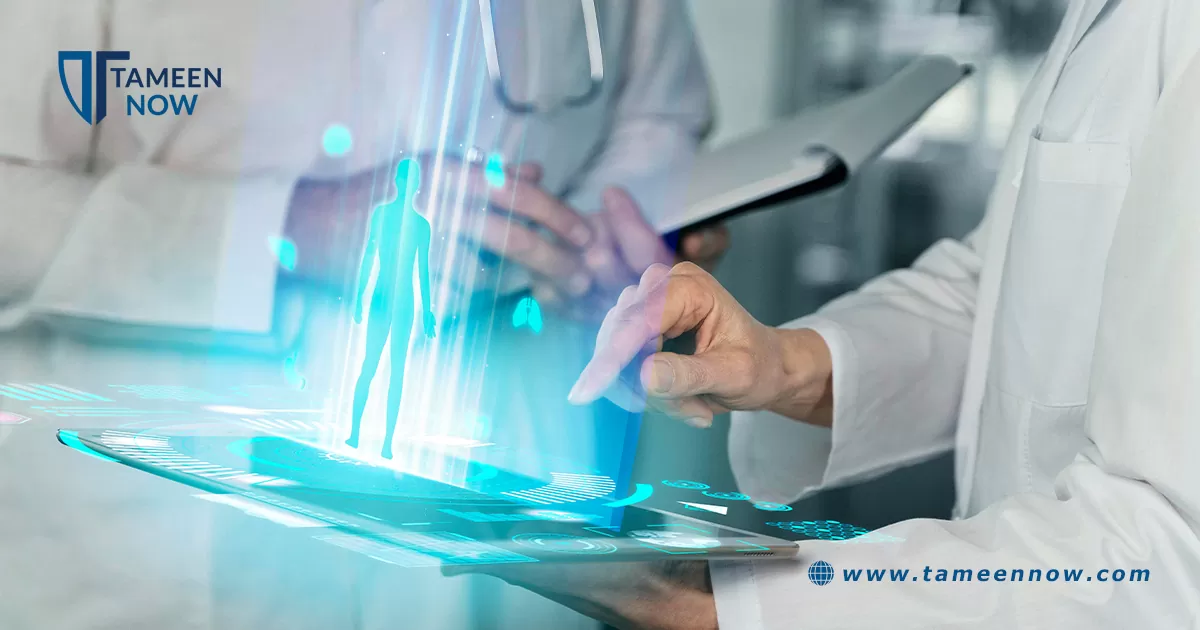
Some expect the metaverse to be widely used in the healthcare sector in the future. Others consider it a technological fantasy.
Promising opportunities in healthcare include improved clinical outcomes, clinical trials, increased efficiency in service delivery and resource utilization, and various communication channels.
Non-clinical applications include research, drug and device development, education and training.
Closely related to the metaverse, digital twins are an emerging technology that are beginning to play a key role in healthcare.
When virtual places are connected to the real world through digital twins, a mirror world is created.
Digital health insurance twins are digital replicas of physical assets or processes, enabling near real-time monitoring even without proximity. Generative AI or LLM is gaining attention.
Tameennow a new development in AI maturity and is considered a foundational model. It is a large-scale pre-trained AI system that can be reused in different domains with minimal effort.
Digital health insurance technologies are transforming
the foundations of medicine and care through digitally enabled care models, including virtual delivery, remote monitoring, and interactive person-centric tools.
Outlook on this trend highlights the shift in the system as new technology-enabled care models allow healthcare to be delivered anytime, anywhere, closer to the patient, such as at home or in the community.
Technology-enabled care models also open up opportunities for innovative services across borders, while being influenced by legal and regulatory factors.
As people become more health conscious, their understanding and thinking about health is also changing.
The concept of healthcare is changing from healthcare delivery systems to wellness, chronic care, and population health.
This will be expanded to include mental health, social determinants, and environmental factors in a diverse, integrated, and seamless system of care.
The Outlook describes six shifts that will shape the future of healthcare, including the shift in care setting from hospital to home,
the evolution of the physician’s role to companion on the patient’s health journey, increasing personalization, and the critical role of data in achieving better outcomes.
The Outlook concludes with a spotlight on two emerging trends:
Transforming Digital health insurance technologies
are now being developed and used in almost every aspect of the health and care industry. Applications range from home self-care,
ambulatory care, emergency department management, virtual intensive care units, image-assisted and robotic procedures to public health and population health.
The healthcare system of the future will be: Proactive rather than reactive Preventive with early intervention to prevent diseases from progressing to a crisis point Targeted at individuals who play a key role in optimizing their health status Virtual care represents a major shift in the value proposition of healthcare.
Anytime, anywhere, it offers a range of new delivery options and channels in addition to traditional episodic and facility-based care. This can range from simple video visits to robust hospital-at-home models.
The new future of technology-enabled healthcare requires health information architecture and infrastructure that supports hybrid care models.
Delivery is shifting and moving closer to the consumer. Healthcare services are increasingly being delivered outside of traditional healthcare facilities.
Six changes will shape the future of digital health insurance:
Point of care: from hospital to home Data ownership: from facility to patient Reference point: from population to individual Physician role: authority to direct Data analytics: from buckets to big data Interaction: from face-to-face to virtual.
FAQS
What are the innovations in healthcare in the UAE?
Digital Health: The UAE is seeing an increase in the use of digital health technologies such as telemedicine, e-prescriptions and wearable devices.
These technologies improve the efficiency, accessibility and quality of healthcare services, allowing patients to receive treatment anytime, anywhere.
What is the UAE’s Digital Health Strategy?
The UAE’s Digital Health Strategy will improve healthcare delivery, evidence-based national health and disease prevention strategies, and enable patients to track their health and wellbeing.
What are the UAE’s plans for the future?
The “We the UAE 2031” vision represents the national plan for the UAE to continue its development path over the next decade, focusing on social, economic, investment and development aspects. The plan aims to strengthen the UAE’s position as a global partner and an attractive and influential economic hub.